
Jeu de rôle · Simulation · 2009
Pokéwalker
Développé par Game Freak Édité par Nintendo
Disponible sur
Présentation
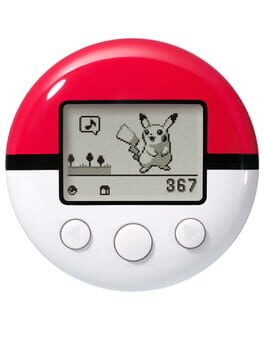
The Pokéwalker is a pedometer device specifically for use with Pokémon HeartGold and SoulSilver that is able to interact with the games in various manners. It was released in Japan on September 12, 2009 bundled with every copy of Pokémon HeartGold and SoulSilver, and then later released with every localized copy of the games. The accessory has a Poké Ball design with a small monochrome LCD screen and three functioning buttons. The Pokéwalker supports infrared signals allowing players to interact within a short range with a game card of Pokémon HeartGold or SoulSilver while slotted in the Nintendo DS, or with another Pokéwalker.
The system records every time a step is taken, and the daily step count influences which wild Pokémon and items will appear. The player can transfer a Pokémon to the Pokéwalker from either HeartGold or SoulSilver, which gains experience for each step. Like the Pokémon Pikachu and Pokémon Pikachu 2 GS, the Pokéwalker uses a currency known as "Watts" (shortened to w); every 20 steps will earn the player one watt. Players can also catch various Pokémon and obtain items on the device, then transfer them to the game. Alongside the Johto Safari Zone, the Pokéwalker allows for Pokémon normally unavailable until after the player has traveled to Kanto, such as Murkrow, to be available before defeating the Johto League.
Much as HeartGold and SoulSilver are remakes of the original Gold and Silver, the Pokéwalker could be considered to be somewhat of a remake of Pokémon Pikachu 2 GS, which interacted in much the same way with the Generation II games. Unlike Pokémon Pikachu 2 GS, however, Pikachu is not the only Pokémon that can be interacted with, and Pokémon can actually be transferred to and from the Pokéwalker at any given time.
Résumé en anglais, repris d’IGDB, en attendant une présentation en français. L’écrire
Durée de vie
Pas encore assez de temps de jeu : la durée de vie s’affiche à partir de 3 joueurs. Vous l’avez terminé ? Donnez le vôtre.
Sorties
| Plateforme | Date de sortie | Région | Statut |
|---|---|---|---|
| Handheld Electronic LCD | Japon | Sorti | |
| Amérique du Nord | Sorti | ||
| Amérique du Nord | Sorti |
Accessibilité
Compléter (31 options inconnues)Vision
- Taille des textes réglable · inconnu
- Modes daltoniens · inconnu
- Contraste élevé · inconnu
- Menus lus à voix haute · inconnu
- Repères sonores pour se déplacer · inconnu
- Effets visuels atténuables (flashs, flou, secousses) · inconnu
- Champ de vision réglable · inconnu
Audition
- Sous-titres des dialogues · inconnu
- Sous-titres des sons (pour sourds et malentendants) · inconnu
- Taille et fond des sous-titres réglables · inconnu
- Nom de qui parle · inconnu
- Indicateurs visuels des sons · inconnu
- Volumes séparés (voix, musique, effets) · inconnu
- Son mono · inconnu
Motricité
- Remapping complet des commandes · inconnu
- Maintien remplaçable par un appui · inconnu
- Appuis répétés remplaçables · inconnu
- Jouable à une main · inconnu
- Sensibilité des commandes réglable · inconnu
- Aide à la visée · inconnu
- Vibrations désactivables · inconnu
- Séquences chronométrées évitables (QTE) · inconnu
Cognition
- Difficulté réglable · inconnu
- Rappel des objectifs · inconnu
- Tutoriels consultables à tout moment · inconnu
- Sauvegarde fréquente ou à tout moment · inconnu
- Pas de limite de temps · inconnu
- Pause à tout moment, cinématiques comprises · inconnu
- Aide à l’orientation (direction, carte) · inconnu
- Passages difficiles évitables · inconnu
- Rythme réglable (vitesse du jeu) · inconnu